How to light a stove or fireplace insert properly
Top-down lighting, dry kindling and open air vents. A method that gets the fire going without smoke and keeps the glass clean.
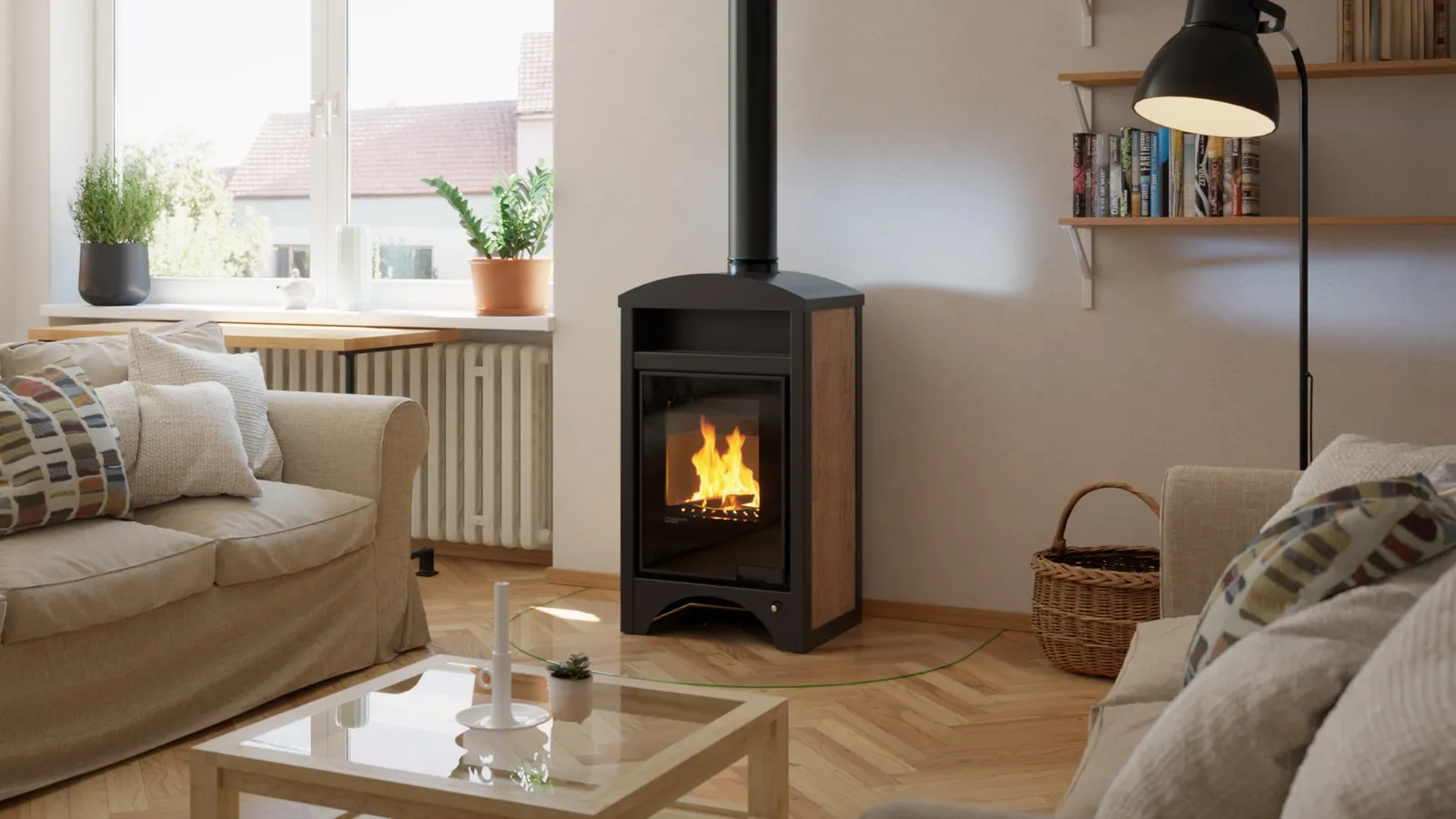
The first twenty minutes decide how the stove will burn all evening. A cold firebox and a cold chimney need to warm up quickly – then the wood burns cleanly, the smoke goes up the chimney and the glass stays clear.
What you’ll need
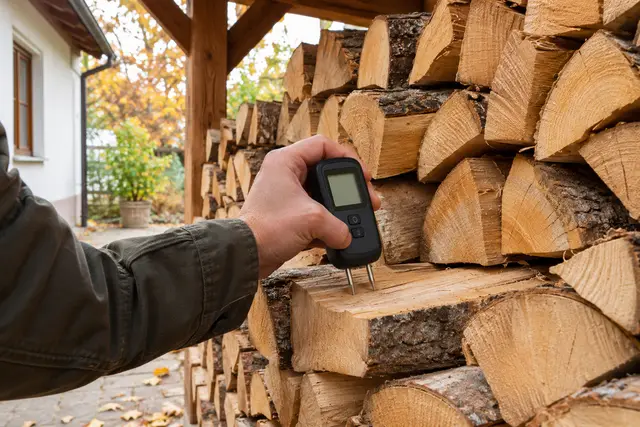
- dry logs with a moisture content below 20% (more in our article Firewood);
- kindling of softwood (spruce, pine), roughly finger to thumb thick;
- firelighters, ideally wood wool with wax – they don’t smell and burn for a long time.
Don’t use paper, cardboard or bark as your main kindling. They burn briefly, produce a lot of ash and light particles fly up the chimney.
Top-down lighting step by step
- Open all the air inlets and the flue damper, if fitted.
- Lay 2–3 larger logs at the bottom side by side, with small gaps between them.
- Lay kindling crosswise on top in two or three layers, from thicker to the thinnest.
- Put the firelighter on top and light it.
- Close the door. With some stoves the manual allows you to leave it ajar for a few minutes so the chimney warms up – follow it.
Why from the top? The fire burns down gradually, and gases from the lower logs pass through the flame and burn off. The chimney warms up quickly and starts to draw. When you light from the bottom, the lower layer smoulders under the cold wood and smokes.
Once the fire is going
- Only start reducing the air when the logs are burning across their whole surface and the flame is lively and yellow. You’ll find the settings in the stove’s manual.
- Add fuel onto a glowing bed of embers, little and often. Never fill the firebox above the level stated by the manufacturer.
- When refuelling, open the door slowly so the pressure equalises and smoke doesn’t billow into the room.
- Don’t leave the fire smouldering overnight with the air closed. Smouldering produces tar and clogs the chimney.
When it smokes
After a longer break the chimney is often cold and damp. A quick “pre-heat” with a handful of thin kindling helps. If the stove smokes regularly, the cause lies elsewhere – read about the most common mistakes when using a stove, or contact a chimney sweep.
Not sure? Write or call us – we’ll advise you straight from the factory. You’ll find our contact details here.