Firewood: what to choose, how to season and store it
Dry wood gives more heat, less smoke and clean glass. How to tell when wood is ready, how long it takes to dry and what doesn’t belong in a stove.
Even the best stove can’t make heat out of water. Wet wood uses up a large part of its energy evaporating moisture – and what’s left goes up the chimney as smoke and tar. Good fuel is therefore the cheapest way to heat more economically.
What moisture content is right
Your stove needs wood with a moisture content below 20%, ideally 15–18%. Freshly felled wood can be more than half water by weight.
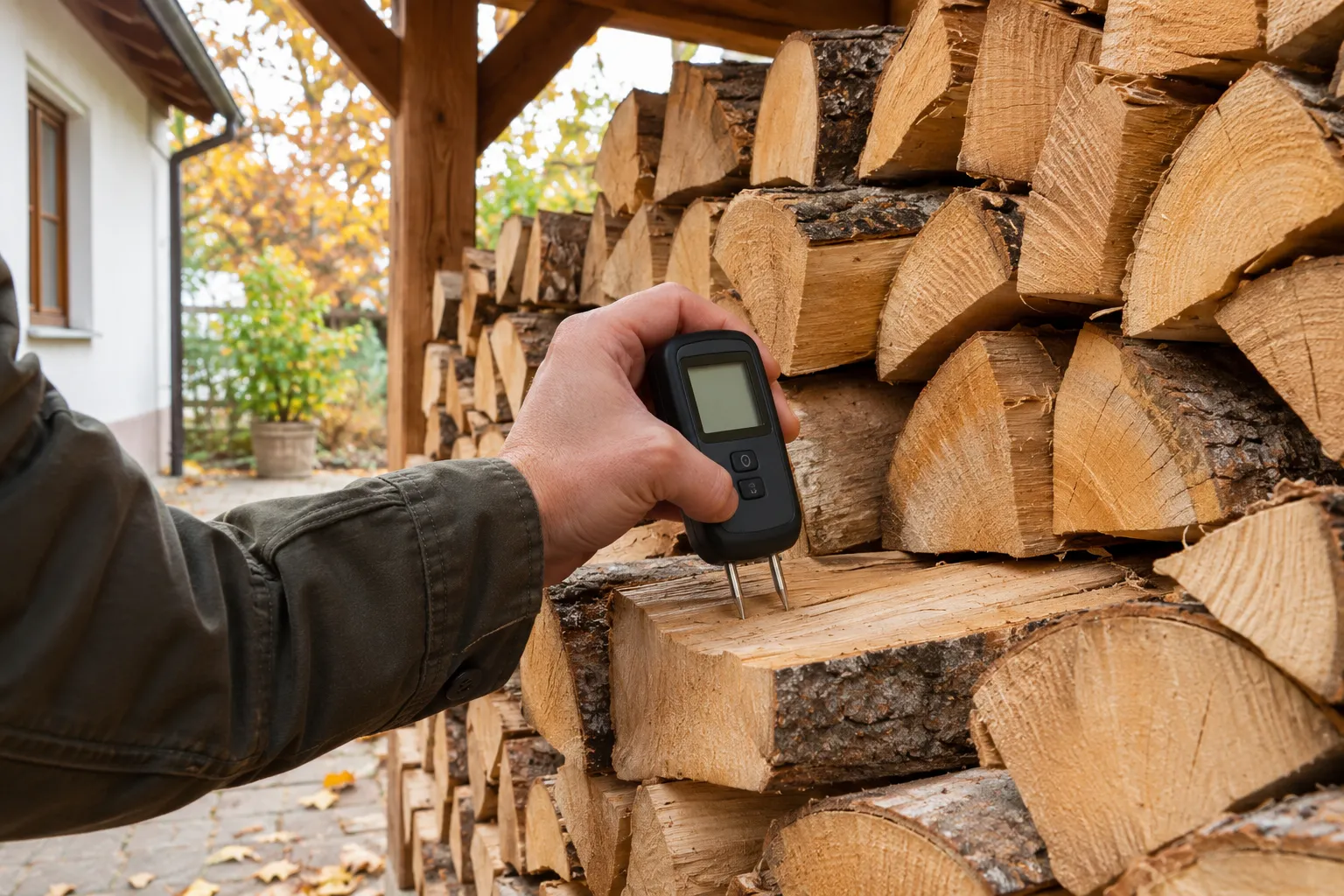
The most reliable tool is a moisture meter. Measure on a freshly split face in the middle of the log, not on the surface, which dries fastest. A quick test also gives a rough idea: dry logs are light, have cracks on the ends and sound hollow when knocked together.
How long wood takes to dry
- Softwood (spruce, pine, poplar) – split and under cover, about a year.
- Hardwood (beech, oak, ash) – usually 1.5 to 2 years; oak rather longer.
What matters most is whether the wood is split. Unsplit logs with bark dry much more slowly. So split next winter’s wood as early as possible, ideally in spring.
Hardwood or softwood?
A kilogram of dry wood gives roughly the same amount of heat whatever the species. Hardwood is heavier, though, so the same volume contains more of it – it burns longer and builds a longer-lasting bed of embers. Softwood lights easily and is ideal for kindling and getting the fire going quickly.
How to store wood
- Under a roof, but not under a tarpaulin. A tarpaulin laid directly on the wood traps moisture.
- Off the ground – on pallets or timber bearers, so the bottom layer doesn’t soak up moisture.
- With air around it. Leave a gap between the stacks and the wall, ideally on the sunny, windy side of the house.
- A few days before use, bring a supply indoors, for example in a log basket, so it warms up to room temperature.
What doesn’t belong in a stove
Varnished, painted or treated wood, chipboard, plywood, plastics or any other waste. When burnt they release harmful substances, damage the stove and chimney, and burning waste in domestic heating appliances is prohibited by law. HS Flamingo wood-burning stoves are designed for wood and wood briquettes; coal doesn’t belong in them – we explain why in our article Can I burn coal in my stove?
Not sure? Write or call us – we’ll advise you straight from the factory. You’ll find our contact details here.