Your story – a stove with a back boiler
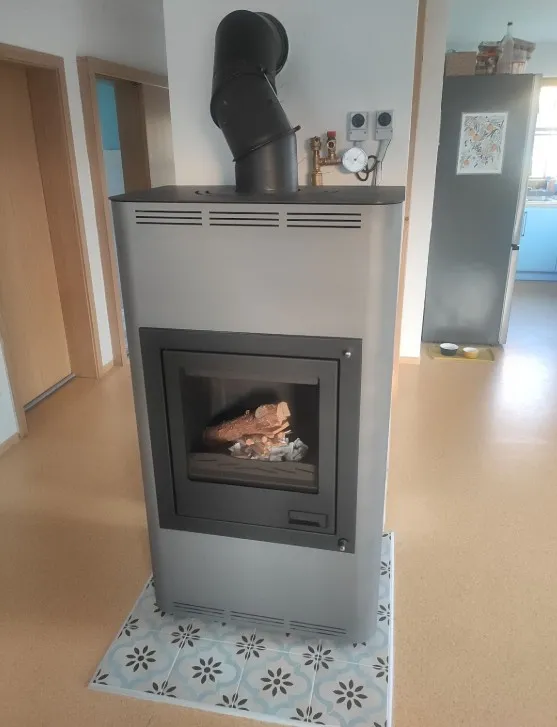
Radek connected his wood-burning stove to a buffer tank and underfloor heating. The system keeps heating for 10 hours after the fire has gone out
Before Radek started renovating a 200-year-old cottage in the Krkonoše mountains, he only planned to replace the old warm-air stove with a more modern one. During the project, however, he changed his mind and went for a much more comprehensive solution. He connected a wood-burning stove to a buffer tank and underfloor heating — and bought a second stove on top. In this interview Radek tells us how much wood he burns a year, how the whole system works and how happy he is with it now that some time has passed.
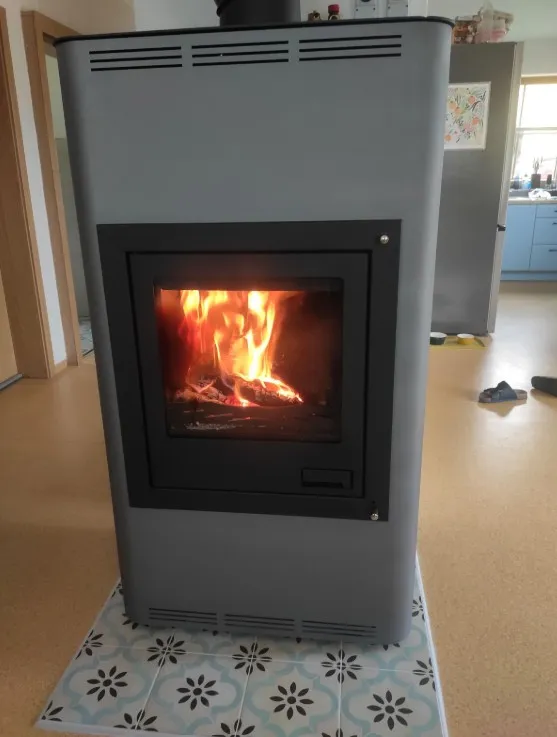
Radek, tell me about your cottage.
We have a fairly large two-storey cottage in the Krkonoše mountains. It's 200 years old, and two years ago we carried out a major renovation, including insulating the whole building.
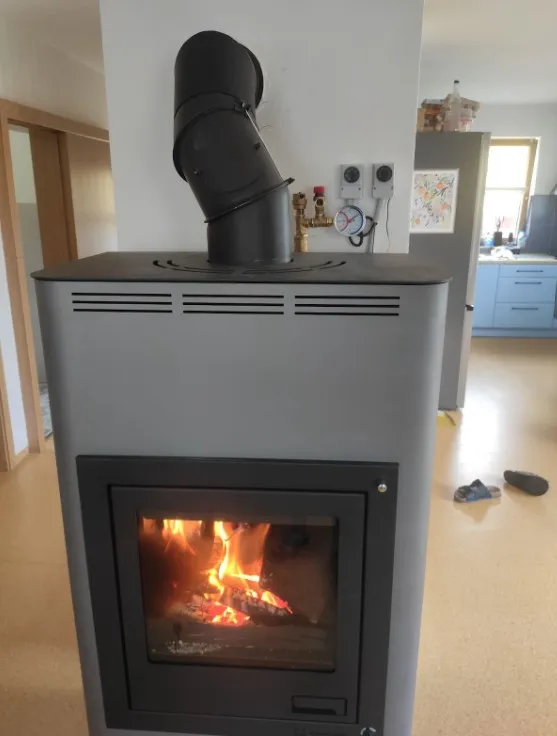
Did you get a new stove as part of the renovation?
Yes. Before, there was a classic old warm-air stove, but it only gave us two options: either it was boiling hot indoors or freezing cold. Before the renovation, the idea was to keep as much of the cottage's original character as possible, so we only wanted to swap the old stove for a newer model. During the renovation, though, we rethought it and went in a slightly different direction.
Which direction?
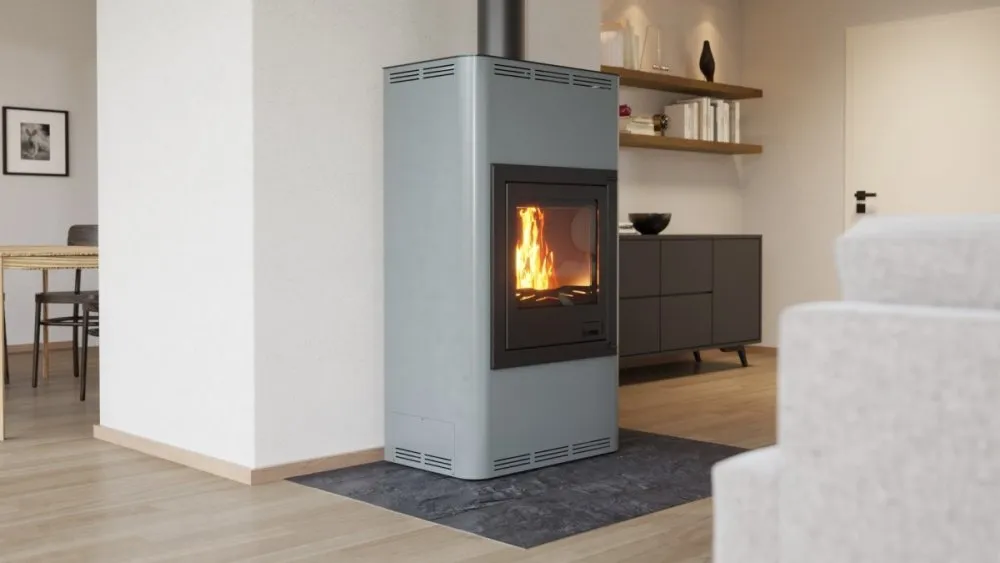
We decided we wanted both a stove and underfloor heating. I asked our plumber, and he said it was no problem and something he does all the time. He just warned us that, given the size of the house, we would need a stove with as high an output as possible. He calculated that we needed at least 20 kW, but that we should allow a reserve of about 5 kW. The most powerful stove I found at the time had 25 kW and was made by HS Flamingo — the Aquaflam 25.
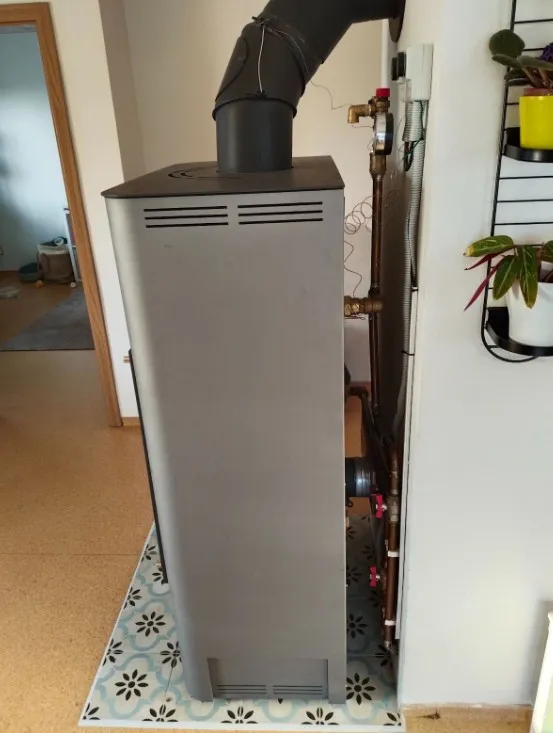
How exactly does the system work?
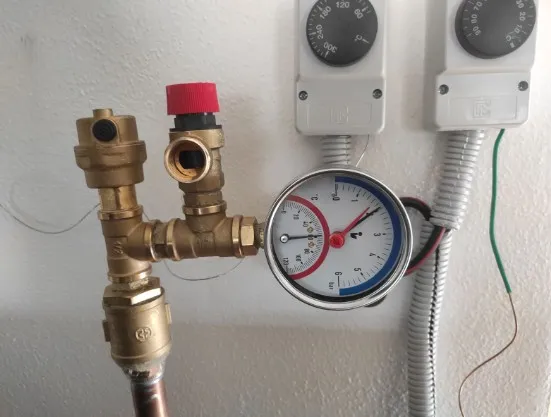
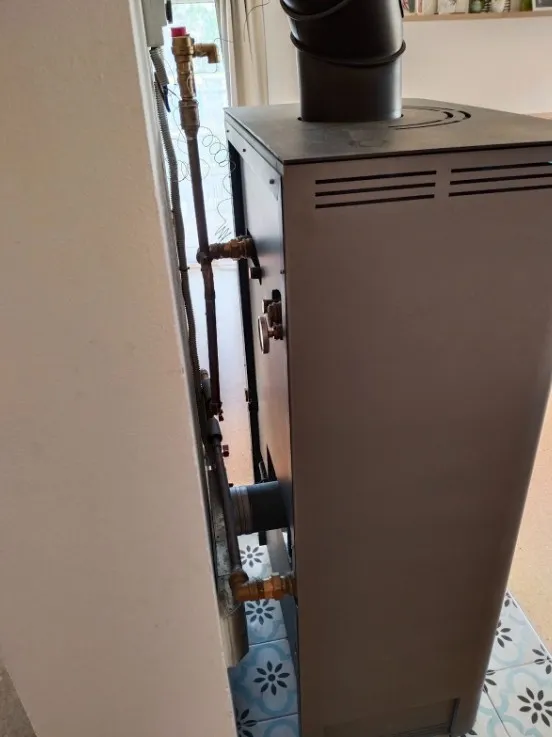
Once we light the fire, the stove gives off heat into the air, but that's only a very small part of its output, about 5 kW. The rest, around 20 kW, goes into the water via the heat exchanger. The water circulates through the underfloor heating and gradually warms the floors and therefore the rooms. We also have radiators connected to the system, but we don't use them much. The system also includes a buffer tank that holds 800 litres of water. Once the cottage is warm, the water in the tank starts heating up. From there, pumps keep distributing water to the underfloor heating and radiators, even long after the stove has gone out — easily 9 or 10 hours.
Where is the buffer tank located?
It's in an insulated shed, so heat losses are minimal. The advantage is that the shed is slightly higher than the rest of the cottage, so the water can also circulate by gravity. If the power goes off and the pumps stop, there's a risk of the system overheating. But because the shed is higher up, the system can keep working even without electricity and pumps. So it's quite a sophisticated set-up.
There's a pipe coming out of the buffer tank that would let us connect a heat pump if we wanted one in the future. It would work like this: when we're burning wood and the water is hot, the heat pump would switch off. And when we don't feel like lighting the stove, the heat pump would switch itself on.
How do you control the temperature in the house?
The radiators have thermostatic valves. By the buffer tank there's a mixing pump, which takes cold water through one valve and hot water heated in the system through the other. On this mixing pump you can set the temperature of the water going to the underfloor heating.
Would you recommend this system after two years of use?
Without a doubt. I recommend it to everyone who asks me for advice. Underfloor heating is really great. Unlike with a warm-air stove, the heat is even throughout the room, right into every corner. I'd choose the same stove and the same company again.