Your story – a warm-air stove
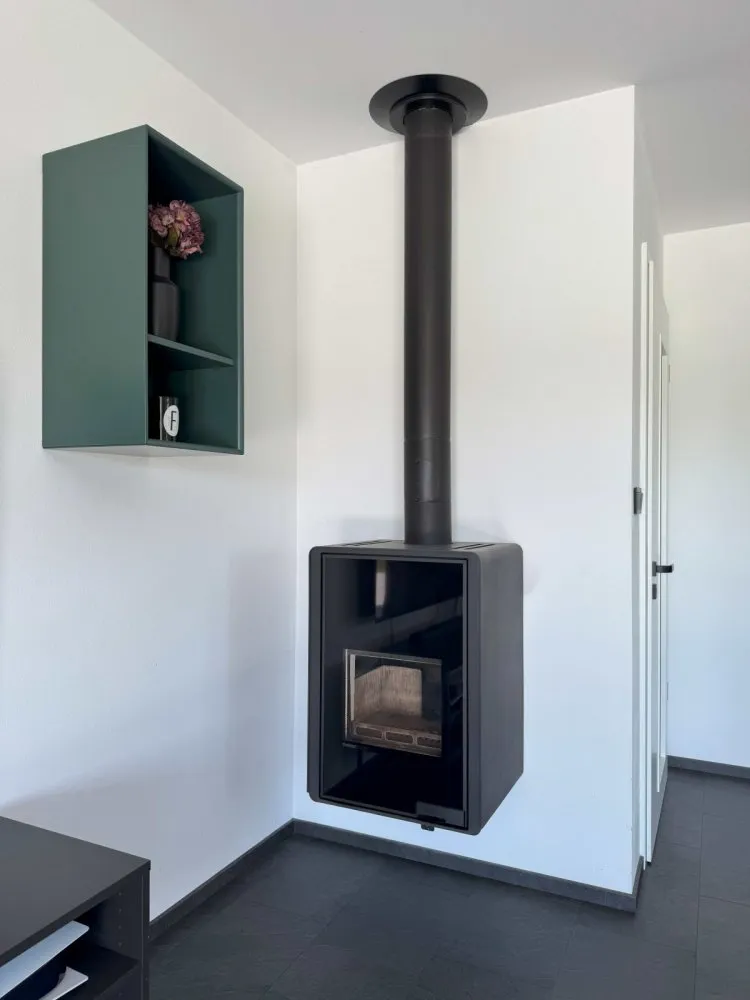
He bought a wall-mounted wood-burning stove so as not to ruin his living room floor. "Two fires a day and the house is warm," says Petr
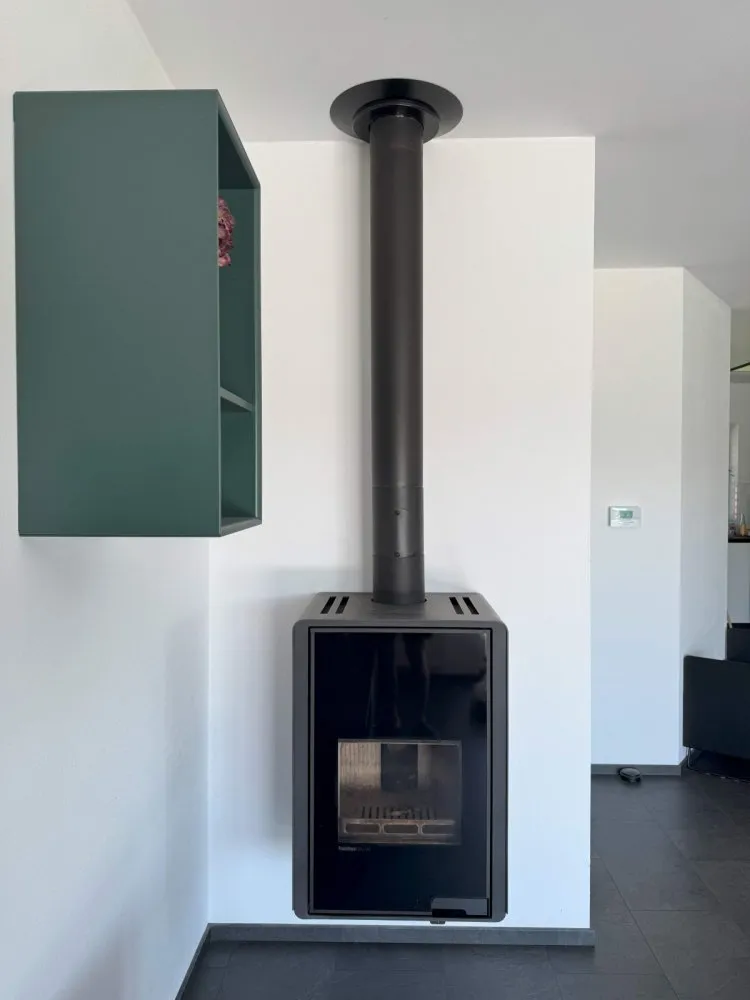
Petr from the Liberec region bought a lovely family home, but it hadn't been signed off by the building authority. To get the final approval, he had to install a wood-burning stove in the house (as specified in the planning documents). The bungalow was brand new, however, and Petr wasn't keen on any building work. Together with his partner he found an ingenious solution — a wood-burning stove that can be hung on the wall. It heats the single-storey house (130 m²) in no time, so the owners don't need to switch on the electric boiler.
Petr, how did a wall-mounted stove help you get the building approval?
Five years ago my partner and I bought a newly built family home. We agreed with the original owner that we would buy the house once it had been signed off. But some minor problems came up during the approval process — for example, a soil filter had to be added after the sewage treatment plant, and the chimney and stove that were in the original plans but never built during construction had to be completed. The plan had been to heat the house with an electric boiler only. The officials didn't like that, though, because it would have changed the energy performance certificate. So the stove and chimney had to be added.
How did you solve the problem with the original owner?
The problems I mentioned made everything a lot more expensive for the original owner, so we looked for an efficient solution together — not just financially, but in terms of construction too. The house had no foundations prepared for a chimney and the floors had already been laid. We didn't want any major building work.
Is that why you went for a wall-mounted fireplace?
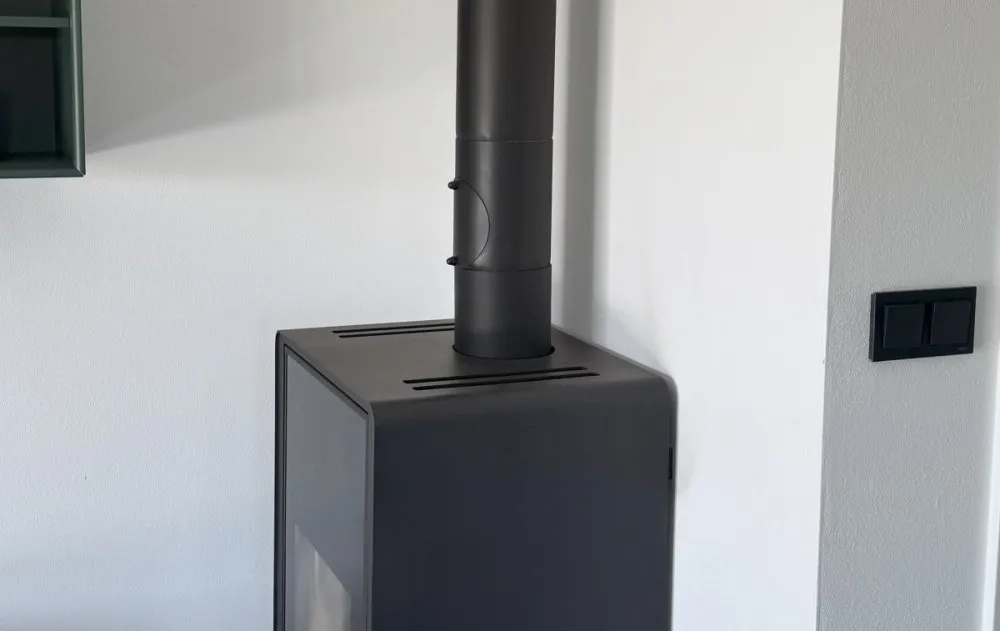
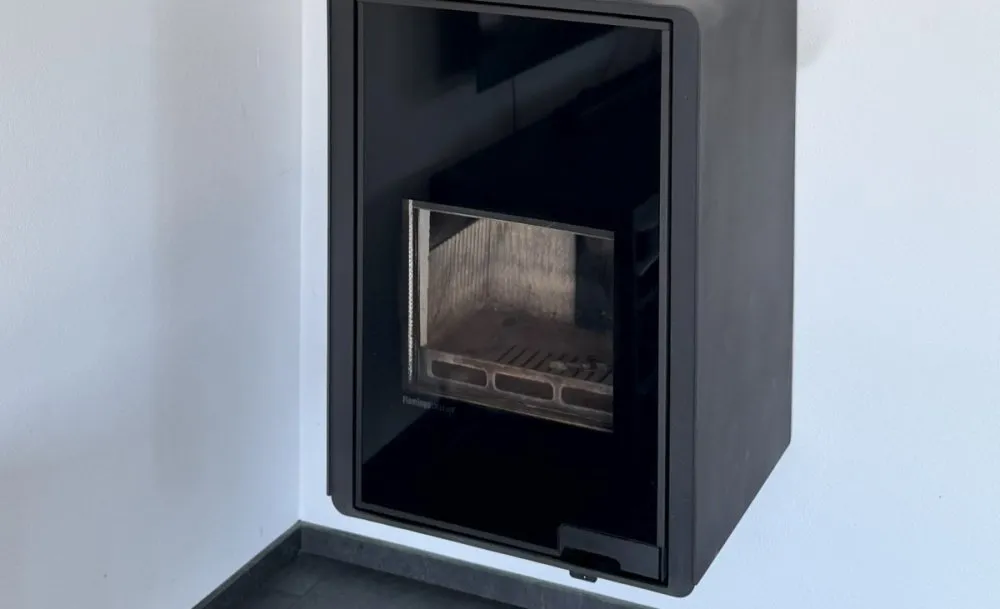
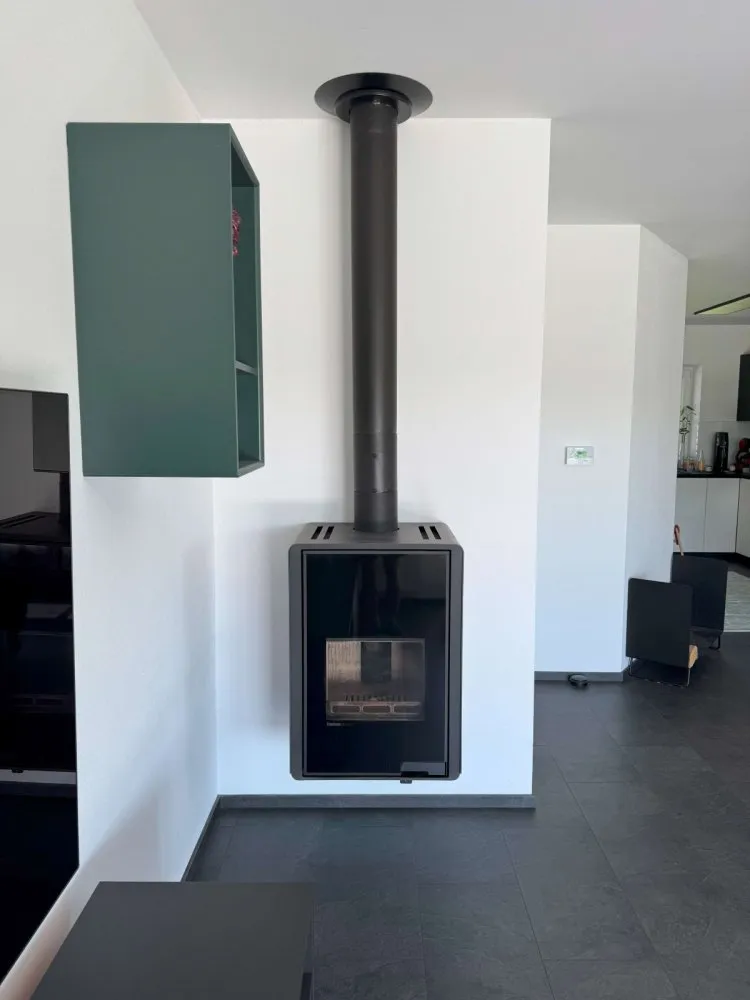
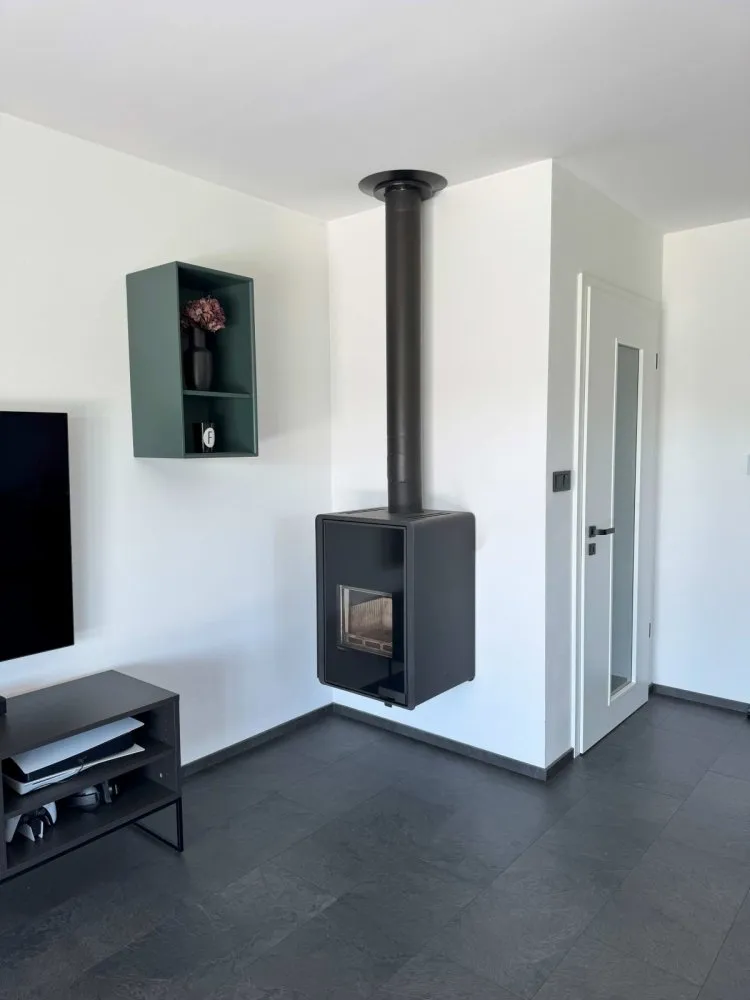
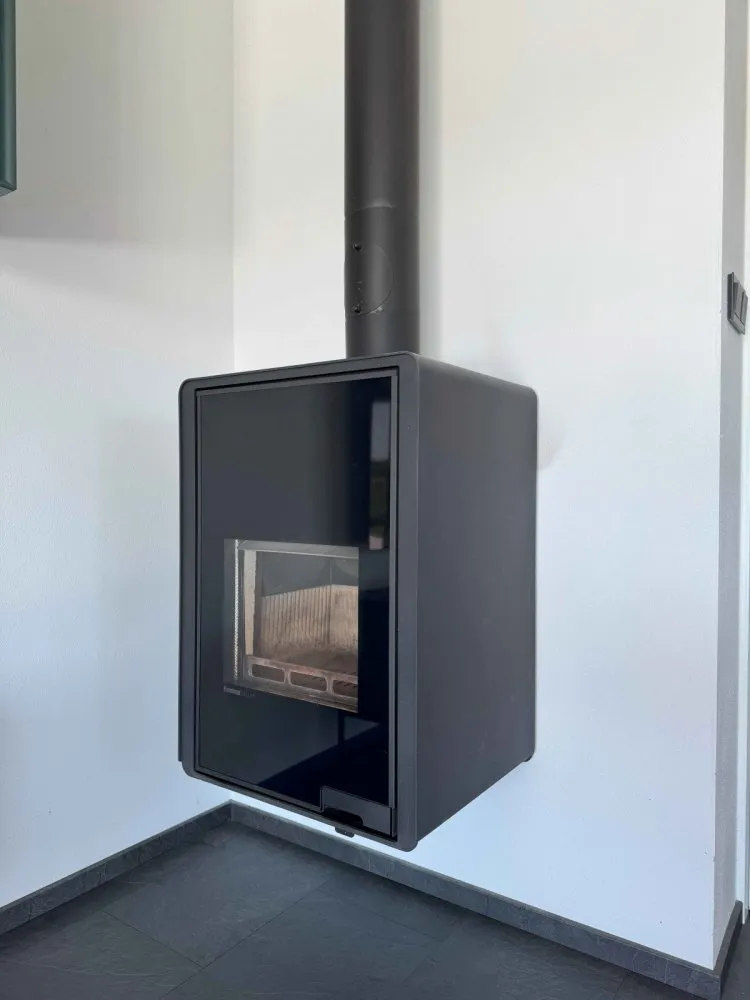
Yes, exactly. We decided to hang the fireplace on the wall so that neither it nor the chimney would put weight on the floors, and to connect it to a flue system serving as the chimney. So the owner paid for the chimney, and we agreed that he would give us 50,000 Czech crowns to choose our own stove. Online, we were taken with the Malia stove from HS Flamingo, which was exactly what we had in mind.
How did you fix the stove to the wall?
I managed to hang the stove myself; it wasn't difficult at all. Behind the living room there's our entrance hall. I had to drill an air supply opening there (I covered it with a white grille) and fix the brackets to the wall with chemical anchors. Then I hung the stove.
Did you manage to build the chimney yourself too?
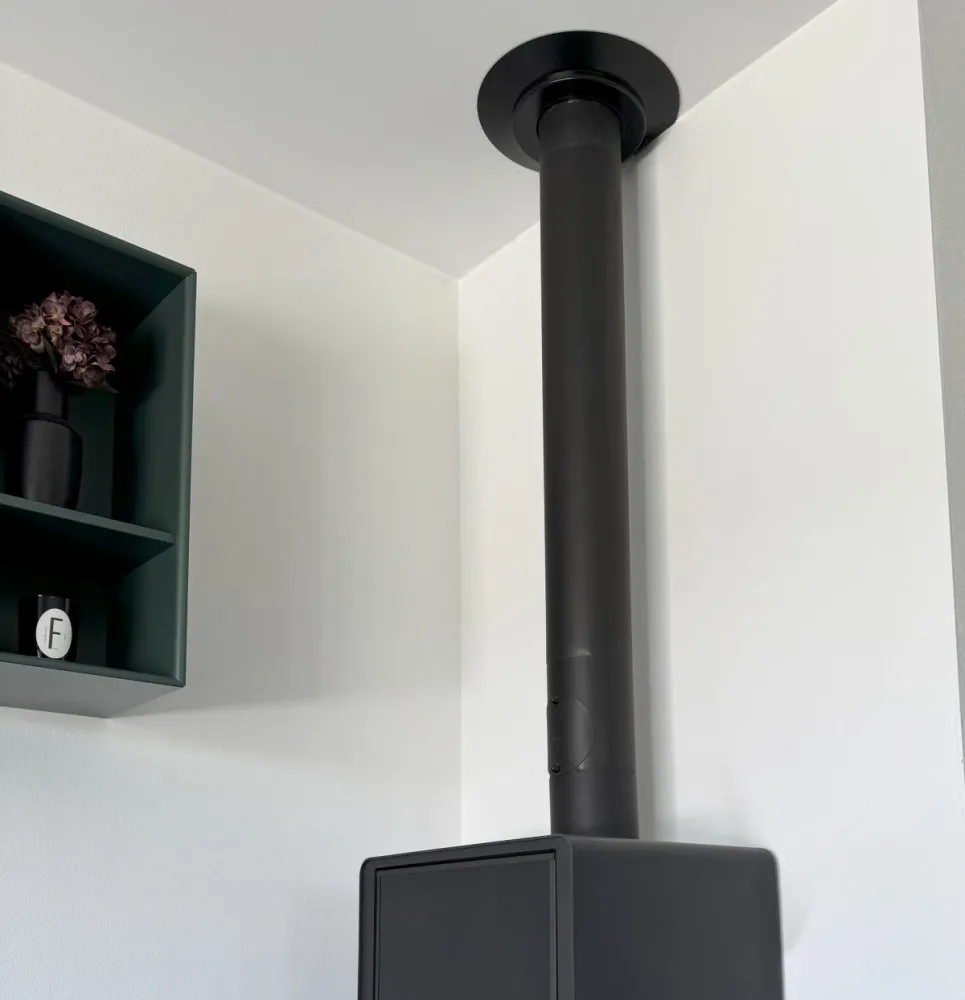
The chimney is clumsily put together from four sections instead of two, not to mention that up in the loft it was screwed to the roof trusses the way a six-year-old would do it.
I also had to grind down the cleaning opening, right at the edge of one of the sections, so that the chimney sections would fit together properly. If I get the chance, I'll have at least the visible lower part of the chimney redone.
How often do you use the stove?
We thought we wouldn't use it very often, but in reality we light it regularly all winter long. We burn hardwood — oak and beech — mainly because hardwood has a high calorific value. You only need a little and it burns for a long time.
When it's below freezing, it's enough to light it once in the morning and once in the evening, without adding more wood. The front of the house is heated to 23–25 °C and the back to 21–22 °C. That's ideal for us, because our bedroom is on the opposite side of the bungalow, so we don't mind it being cooler there. The rooms where we spend the day (kitchen and living room), on the other hand, are warmer.
Would you recommend this stove to your friends?
Overall I rate the stove positively, because it does what you expect of it — it "produces" heat at relatively low cost. It needs a bit of care, but nothing that's overly annoying. And the heat it gives off is lovely. Finally, I'd just add that it was a fairly efficient solution and we're glad we didn't have to carry out major building work to get the approval.