Central heating with a boiler stove or insert
A stove with a back boiler heats not just the living room but the whole house via radiators and underfloor heating. How the system works, what it needs and how to choose the output.
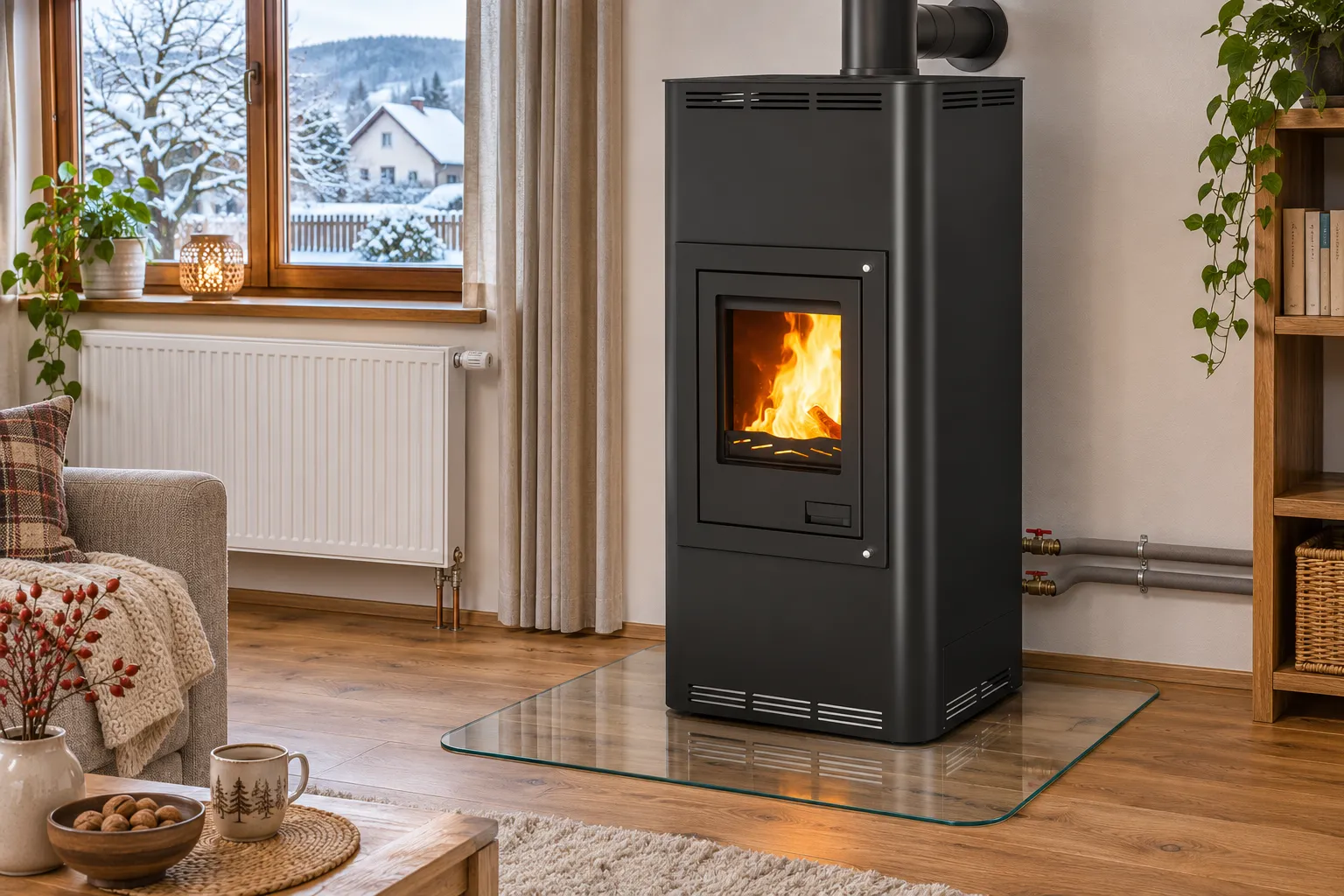
Boiler stoves and inserts link the fire in your living room with your central heating. Most of the heat goes not into the room air but into water, which carries it to radiators or underfloor heating throughout the house.
How it works
A water heat exchanger surrounds the firebox. The water in it heats up and a circulation pump sends it into the heating system. A smaller part of the output radiates through the glass and casing into the room where the stove stands.
The Aquaflam range includes stoves and fireplace inserts with a heat exchanger in 7, 12, 17 and 25 kW versions. Aquaflam VARIO offers tiled stoves with or without a heat exchanger.
What the system needs
- Buffer tank. It stores the extra heat the stove produces, and the heating system draws on it even after the fire has gone out. The stove can then burn at full output and cleanly, without smouldering.
- Cooling loop. A safety device that removes heat using cold mains water if the stove overheats. It is connected according to the manual and must always be working.
- Controls. They monitor the water temperature and control the pump. With Aquaflam you can choose manual, basic electronic or fully automatic air control.
Never light a stove with a heat exchanger without water in the system – we explain why in our article Can I use a boiler insert without water?
How to choose the output
With boiler stoves, what counts is the output to water, not the total output. It must cover the heat loss of the house, which a building designer or heating engineer will calculate. The output to air, on the other hand, should stay low so the living room doesn’t overheat.
If the stove is to be your main heat source, plan for a buffer tank and for refuelling regularly in freezing weather. As a supplement to a heat pump or gas boiler, you can choose a lower output.
Professional installation only
Connection to the heating system is a job for a heating engineer: the safety devices, pump, expansion vessel and protection against low-temperature corrosion must be connected according to the manual and the design. Professional installation with a certificate is also a condition of the warranty.
Not sure? Write or call us – we’ll advise you straight from the factory. You’ll find our contact details here.