Convection or radiant stove? How stoves give off heat
One stove heats the air, another heats objects and walls. The difference between convection and radiant heat, and what it means for your home.
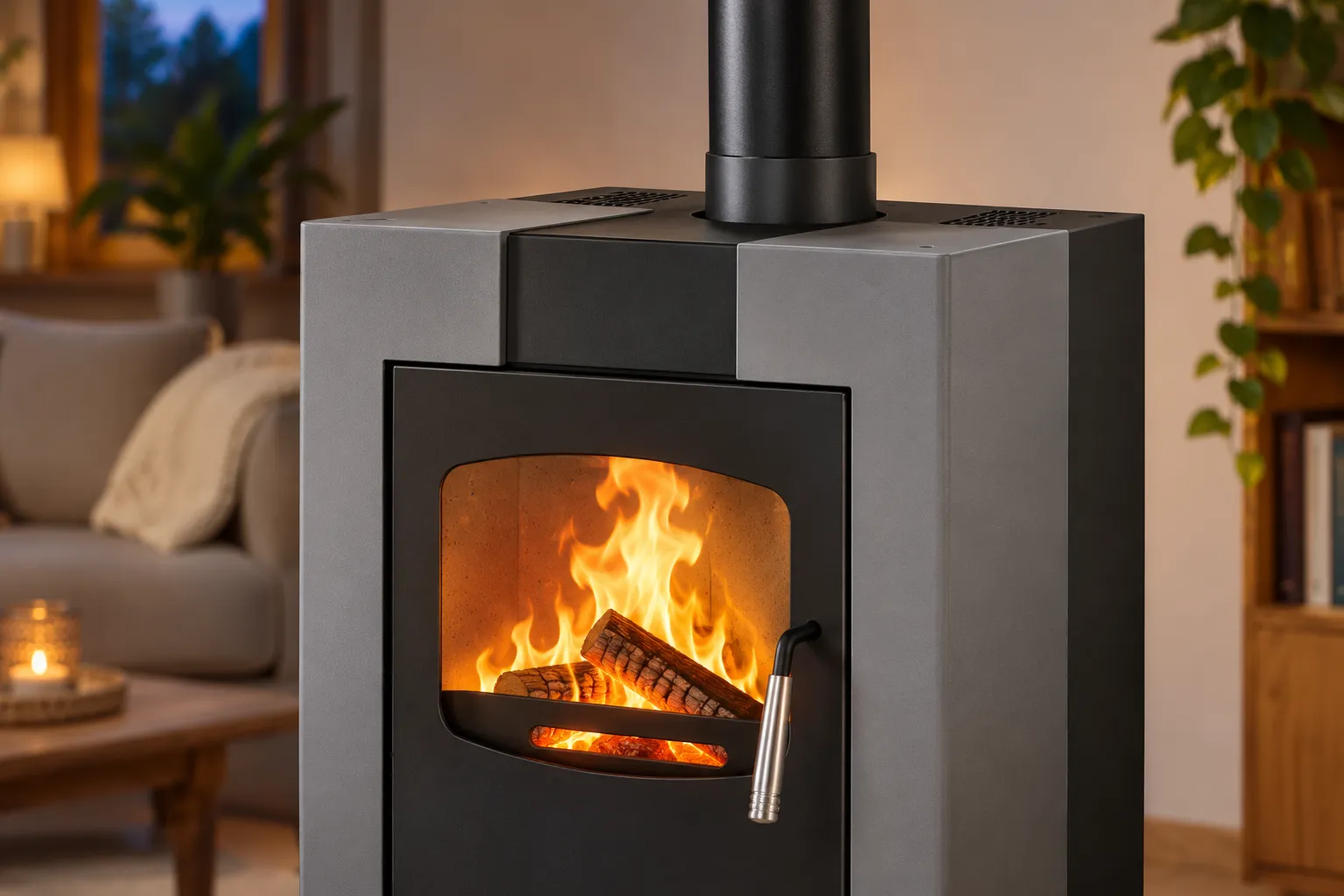
Wood-burning stoves give off heat in two ways: they warm the air that circulates around the room (convection) and they radiate heat directly into their surroundings (radiant heat). Every stove does both – it’s the ratio that matters.
Convection stoves
These have a double casing. Cool air enters at the bottom, flows through the gap around the firebox, warms up and comes out into the room through the top openings. This creates natural circulation that carries heat even into the far corners.
- even heat throughout the room, including open-plan spaces;
- a lower outer casing temperature – safer around children and pets;
- less risk of overheating nearby furniture;
- warm air can be ducted to other rooms.
Radiant stoves
These have a single casing that gets very hot and radiates heat like the sun. They mainly heat objects, walls and people within reach.
- a quick feeling of warmth near the stove;
- a higher surface temperature and greater clearances from combustible materials;
- further from the stove it’s cooler, as the heat spreads less well.
What about heat-storage stoves?
Tiled and heat-storage stoves have a large mass that warms up and releases heat long after the fire has gone out. One example is the Aquaflam VARIO tiled stoves.
How we do it at HS Flamingo
Our stoves have a double-casing convection design. The large glass panel adds pleasant radiant heat – you feel the warmth of the fire, but the stove doesn’t scorch its surroundings. For modern homes with open-plan spaces, we believe this is the most comfortable and safest solution.
Not sure? Write or call us – we’ll advise you straight from the factory. You’ll find our contact details here.