How to connect a stove to the chimney: flue pipe, elbows and reducers
The flue pipe should be as short as possible, with as few elbows as possible and a way to clean it. What to bear in mind when connecting a stove and when to call a chimney sweep.
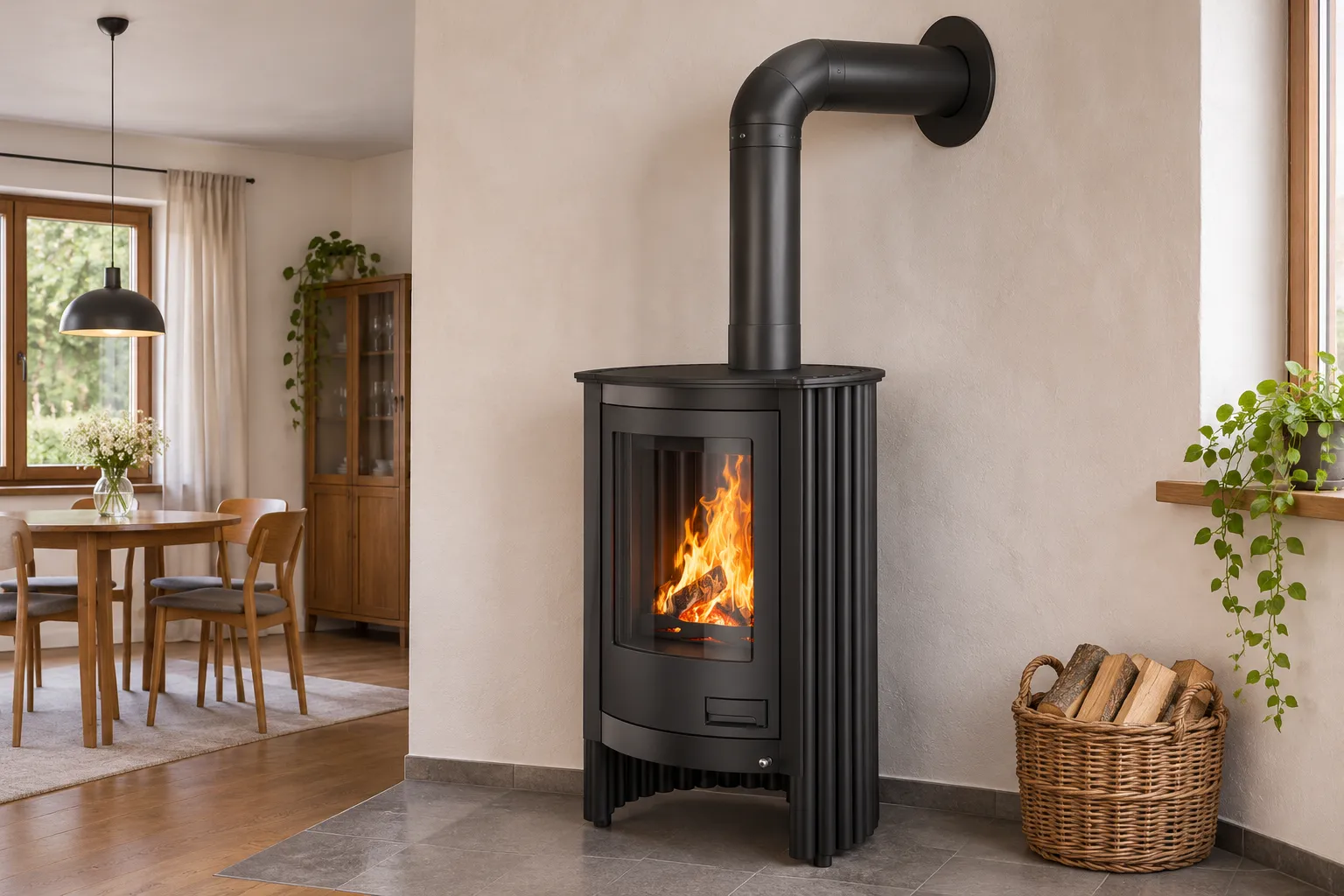
The stove and the chimney form a single system. Even the best stove will smoke if the flue pipe is too long, full of elbows or badly connected. Before you start, have a chimney sweep confirm that the chimney is suitable for the stove.
Positioning the stove
The chimney determines where the stove goes – ideally as close as possible to the chimney inlet. Stand the stove on a non-combustible base (glass or steel) and keep to the safe distances from combustible materials stated in the stove’s manual.
Flue pipe
- The diameter of the flue pipe matches the stove’s flue outlet. You’ll find it in the technical specifications of every stove.
- As few elbows as possible. Every elbow adds resistance to the flue gases and weakens the draught. If you can, make do with two.
- Cleaning opening. An elbow with a cleaning opening lets you clean the flue pipe without taking it apart.
- Joints slot into one another; no screws or adhesives are used. The direction of the joints and how to secure them are described in the manual.
You’ll find pipes, elbows and other parts in our Flue pipes category, in two wall thicknesses: 1.5 and 2 mm.
Reducers and adaptors
Going from a smaller diameter to a larger one (stove outlet → chimney) is no problem with a reducer. Narrowing down to a smaller chimney diameter can weaken the draught, so always have it assessed by a chimney sweep or stove fitter first.
A ceramic chimney liner needs a special chimney connector. A metal pipe pushed straight into ceramic expands when heated and can damage the liner.
Chimney draught
Too weak a draught means smoke when you refuel. Too strong a draught speeds up combustion and overheats the stove. A strong draught can be tamed with a chimney draught stabiliser; a weak one is a job for a chimney sweep (height, diameter, airtightness of the chimney).
Inspection before first use
Before putting the stove into service, and whenever you replace an appliance, the flue system must be inspected by a chimney sweep. You shouldn’t use the stove without it, and in the event of a fire its absence could complicate your insurance claim.
Not sure? Write or call us – we’ll advise you straight from the factory. You’ll find our contact details here.