External air supply: why modern homes need it
Airtight windows, heat recovery ventilation and cooker hoods all take air away from a stove. How an external air supply works and why we build it into HS Flamingo stoves.
Fire needs oxygen. Older houses supplied it to stoves on their own – through draughty windows and gaps. Today’s new builds and insulated homes are airtight, so the stove takes air from the room, and that air has nowhere to come from.
What happens when there isn’t enough air
- the fire burns sluggishly and incompletely, and the glass soon blackens;
- smoke comes into the room when you refuel;
- a running cooker hood or bathroom extractor creates negative pressure and can reverse the draught – flue gases then head into the house;
- ventilation with heat recovery gets out of balance.
A typical sign: the stove only burns well with a window ajar.
Three ways to supply air
- Into the room next to the stove. This only partly helps and doesn’t solve the cooker hood problem.
- Into a non-sealed firebox. Air comes from outside, but the firebox still takes air from the room as well.
- Into a sealed firebox. The stove burns only air brought in from outside and doesn’t exchange it with the room. This is the best solution for airtight homes.
Eko-Air-In on HS Flamingo stoves
Flamingo, Aquaflam, Aquaflam VARIO and Masterflamme stoves and inserts feature the Eko-Air-In system: a single external air inlet that splits into three branches inside:
- primary – under the grate, for lighting and getting the fire going;
- secondary – along the glass (airwash) and into the flame to burn off the gases;
- tertiary – into the upper part of the firebox, where the wood gases finish burning.
As a result, the stove burns steadily whatever is happening to the pressure in the house, and the glass stays clean.
How to install the air supply
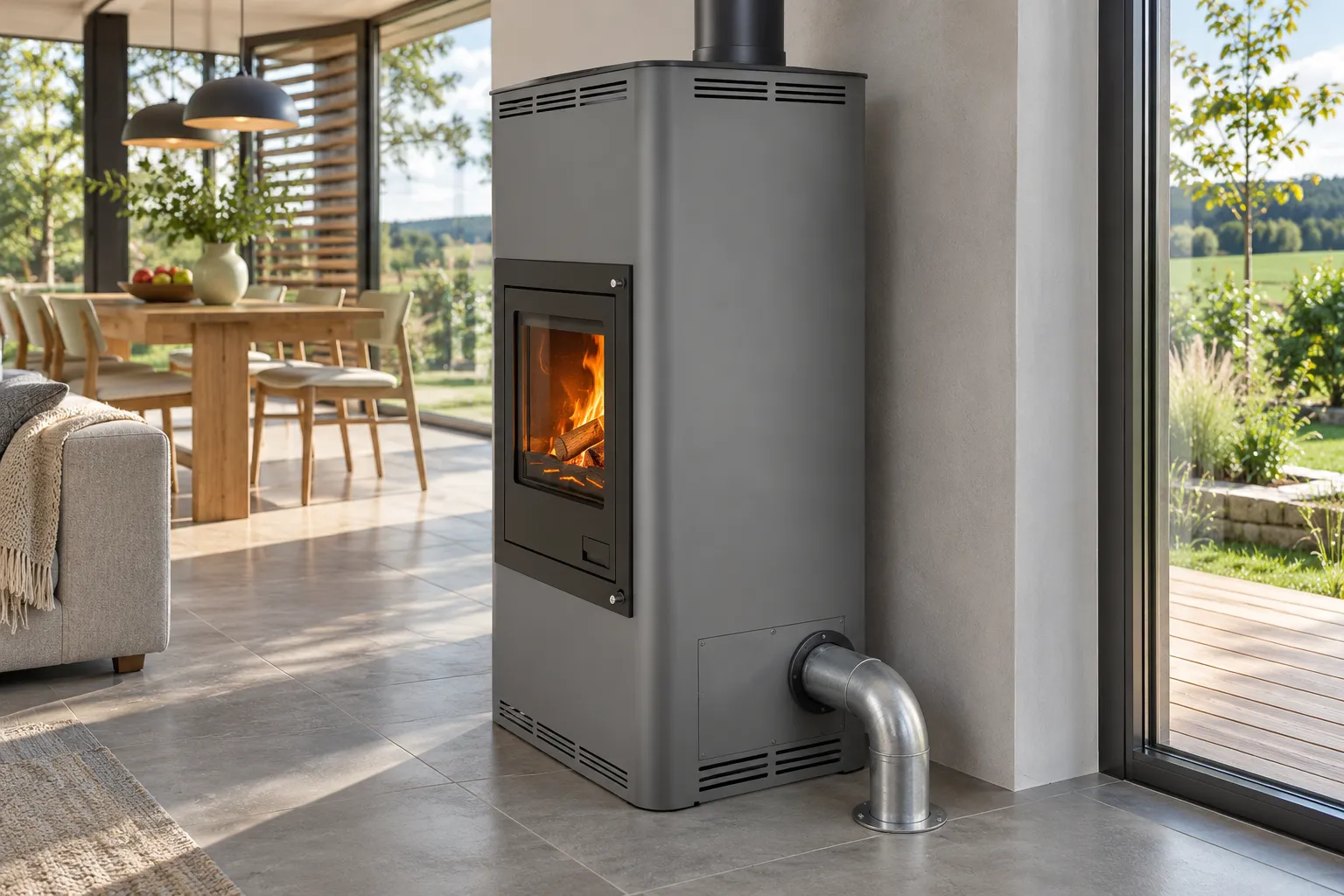
The duct runs from the outside wall or from a ventilated space (garage, hallway) to the spigot at the back or bottom of the stove. The diameter and maximum length are given in the manual. The outside end needs a grille to keep out insects and leaves. It’s best to plan the air supply at the design stage – fitting the duct later is more complicated.
Not sure? Write or call us – we’ll advise you straight from the factory. You’ll find our contact details here.