
Rectangular ducting is the basis of warm-air distribution where there is little room for standard flexible hoses. Here you will find straight channels, elbows, splitters, reducers to flexible duct and to a grille, connectors, inlets, mounting brackets and an insulating sleeve.
The parts are ideal for anyone building a fireplace surround who wants to get heat from the insert to rooms further away.
Rectangular ducting
8 products in this category.
Filters (active)
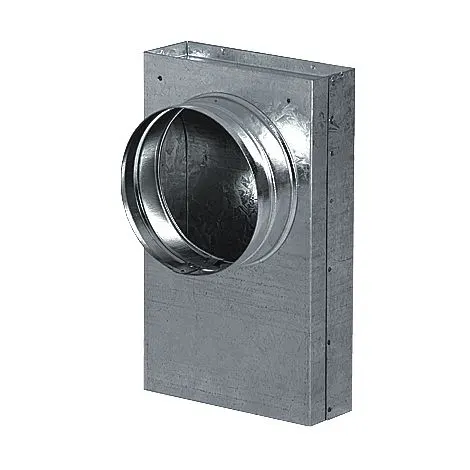
Reducer 90°, duct - flex 100mm
90° Reducer, Duct - Flex 125mm
5.0 (1)Adapter 90°, duct - flex 150mm
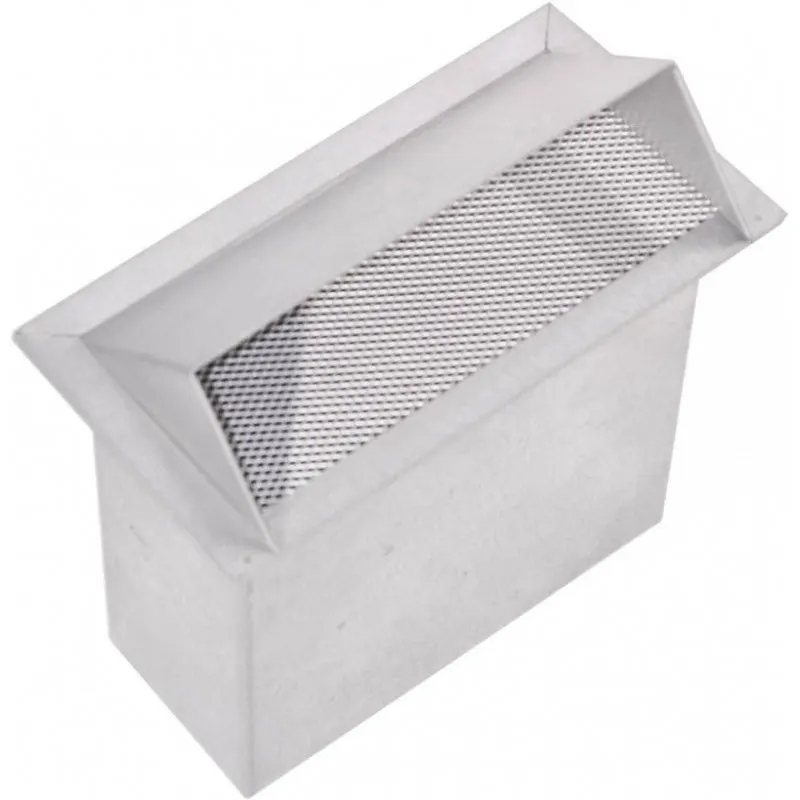
Rectangular Connector 150x50 mm, Galvanised
5.0 (1)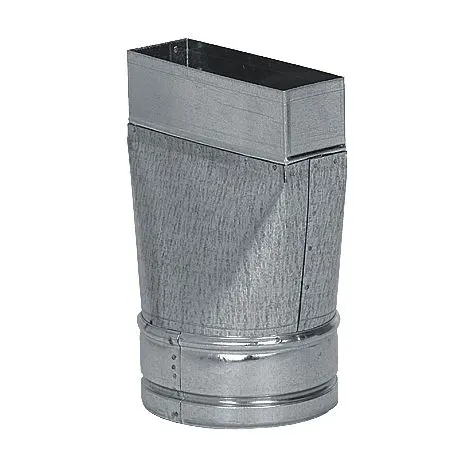
Straight Reducer, Duct – Flex 125mm
Straight reducer, duct - flex 100mm
Straight reducer, duct - flex 150mm
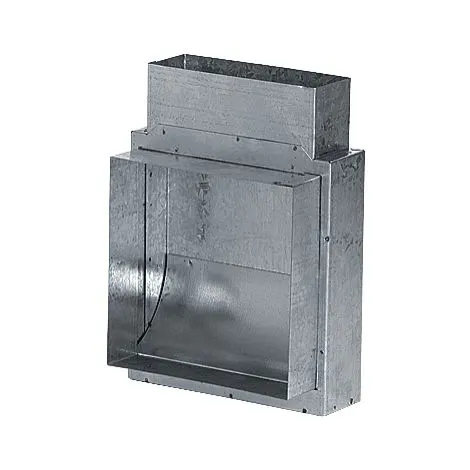
90° Reducer, Duct to Grille
5.0 (1)How to build a run from rectangular ducting
The flat 150x50 mm cross-section fits into ceiling voids, above door frames and into narrow shafts where round ducting would not go. You put the run together from straight sections 50 and 100 cm long and add fittings to suit the layout of the house. 45° and 90° elbows, a wall-to-ceiling elbow, a cross piece or Y and T splitters let you distribute warm air to several rooms from a single insert.
Things to consider when choosing parts
- Transitions: straight and 90° reducers connect to 100, 125 and 150 mm flexible hoses or directly to an outlet grille.
- Regulation: a damper with a pull rod lets you close off a branch to a room you do not want to heat at the moment.
- Insulation: the insulating sleeve limits heat loss over a long run and protects surrounding structures.
- Fixing: space the mounting brackets evenly; for sleeved ducting, use the bracket designed for insulated channels.
Practical tips
Keep runs as short as possible with a minimum of bends — every elbow increases resistance and reduces the amount of air that reaches the room. Fit the joints carefully and make sure the system does not rattle or carry sound. Choose inlets and connectors in the same size as the rest of the channel, and only use reducers for transitions to another diameter. It pays to plan warm-air distribution before the surround is closed up; alterations afterwards are always more work.